
Introduction
Thinking about welcoming an Australian Shepherd Puppy into your life?
Your life will receive both deep devotion and bright friendship along with intense excitement from the Australian Shepherd Puppy adventure. People commonly refer to this breed as the Aussie dog because it stands out due to its enhanced mental capabilities combined with its attractive appearance along with widespread endurance.
The practicality of caring for Australian Shepherd Puppies requires strong emotional resilience. The Australian Shepherd puppy needs energetic exercise because he combines intense intelligence with abundant power levels.
The guide contains complete information necessary for developing a happy and healthy adult Australian Shepherd puppy into mature doghood.
Table of Contents
Understanding the Australian Shepherd Puppy
Where Do Australian Shepherds Really Come From?
Despite their name, Australian Shepherds actually trace their roots to the United States.
Yep—you read that right. These dogs were created for ranch livestock herding on American territory however, Australian references originate from Basque shepherds who migrated to the U.S. through Australia during the nineteenth century.
This blend of heritage created the energetic, quick-learning Aussie dog we adore today.
Physical Traits of an Aussie Dog
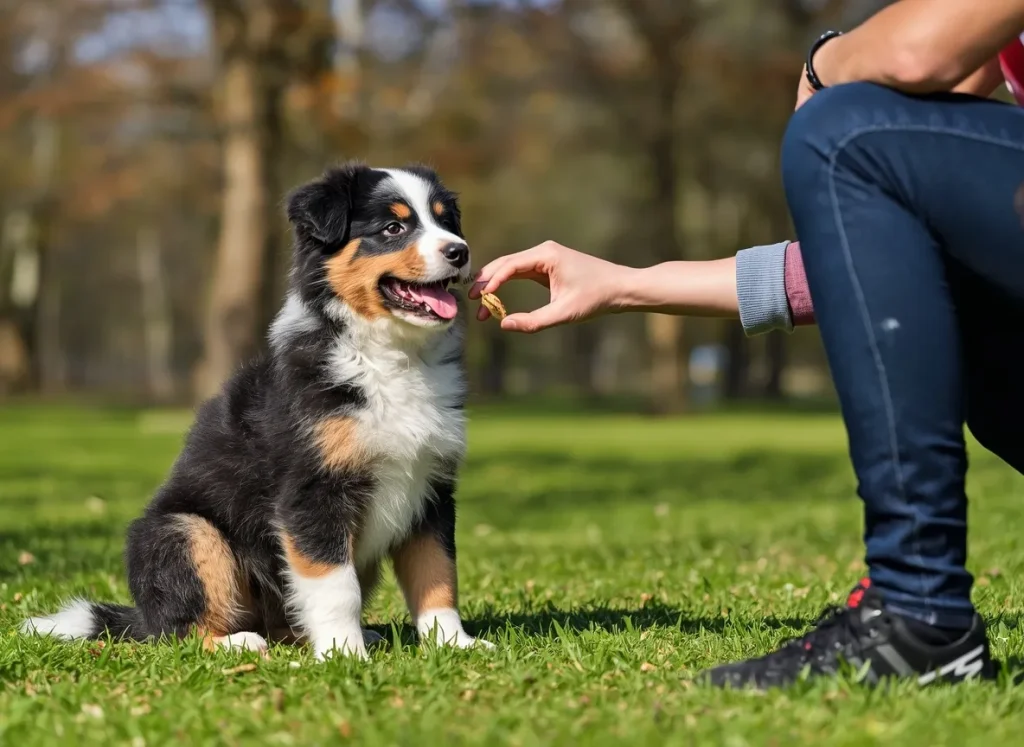
Australian Shepherd Puppies are little balls of fluff with big potential. They grow into medium-sized dogs with:
- A thick double coat that can be straight or wavy
- Colors like blue merle, black, red merle, and red, often with striking white or tan markings
- Eye colors that range from brown to blue—and sometimes one of each!
Their breathtaking looks are just the icing on the cake.
Why an Australian Shepherd Puppy Might Be Your Perfect Match
Thinking an Aussie dog might be your soulmate?
Here’s why you might be right:
- Intelligence: They pick up new tricks faster than you can say “sit.”
- Loyalty: An Aussie will stick by your side through thick and thin.
- Energy: If you’re active, an Australian Shepherd Puppy will be your dream sidekick.
- Affection: Despite their rugged working-dog history, Aussies are total snuggle bugs at home.
Choosing Your Australian Shepherd Puppy
Finding a Reputable Breeder
Choosing the right breeder can make or break your Aussie experience.
A responsible breeder will:
- Provide health clearances for hips, elbows, and eyes
- Let you meet the puppy’s parents
- Encourage questions about temperament and care
- Never rush you into buying
Steer clear of breeders who don’t ask questions about you—because a good breeder cares where their pups end up.
Adopting an Aussie Dog
Adoption is another wonderful path.
Many amazing Australian Shepherds end up in shelters because previous owners didn’t understand their needs. Australian Shepherd matches await at both breed-specific organizations and local rescue centers.
Bringing Home Your Australian Shepherd Puppy
Puppy-Proofing Your Home
Before your little Aussie dog arrives, get ready for some serious puppy prep.
These pups are curious explorers—and that’s putting it mildly.
Here’s a quick checklist to puppy-proof your home:
- Secure cords, cables, and anything chewable
- Store cleaning supplies out of reach
- Use baby gates to limit access to off-limits areas
- Remove small objects they might swallow
Trust us, an Australian Shepherd puppy will find that one sock you didn’t hide.
First Day at Home: What to Expect
The first 24 hours can be a rollercoaster—for both of you.
Your Australian Shepherd Puppy may feel anxious or overexcited, so keep things calm and quiet. Create a safe space like a crate or a cozy bed where they can retreat when overwhelmed.
Stick to a routine from day one. Puppies thrive on consistency.
Training Your Australian Shepherd Puppy

Why Early Training Is Non-Negotiable
Aussies are one of the smartest breeds out there. That’s amazing—until they outsmart you.
Without structure and boundaries, they’ll invent their own rules. Spoiler alert: You won’t like them.
Start with the basics:
- Sit, stay, come, leave it
- Leash walking
- Crate training
Use positive reinforcement—treats, toys, and a ton of praise. Harsh corrections don’t work with these sensitive pups.
Socialization for a Well-Rounded Aussie Dog
Exposing your Australian Shepherd Puppy to a wide range of people, pets, sounds, and environments between 8–16 weeks is critical.
Introduce them to:
- Other vaccinated dogs
- Kids and adults of all ages
- Cars, vacuum cleaners, doorbells
The more they see early, the more adaptable they’ll be as adults.
Exercise Needs of an Aussie Dog
High Energy, High Reward
If you’re looking for a couch potato… this ain’t it.
Australian Shepherds were bred to work all day, and that instinct is still alive and kicking.
Your Aussie dog needs:
- At least 1–2 hours of exercise daily
- A job (obedience training, puzzle toys, agility, herding balls)
- Playtime that involves mental and physical stimulation
An under-exercised Aussie can quickly become destructive.
Give them an outlet—or they’ll create one, and it probably involves your couch.
Best Activities for Australian Shepherd Puppies
Not sure where to start? Here are a few Aussie-approved ideas:
- Hide and seek (with you or treats!)
- Obedience classes
- Fetch with a twist (try uneven terrain or hills)
- Canine sports (they love agility and flyball)
Keep it varied, and they’ll stay happy.
Feeding Your Australian Shepherd Puppy
What Should You Feed an Aussie Puppy?
A balanced diet fuels that boundless Aussie energy.
Look for high-quality puppy food rich in:
- Protein (chicken, lamb, fish)
- Omega-3s (for joint and brain health)
- Calcium and phosphorus (for growing bones)
Avoid fillers like corn, soy, or artificial dyes.
Stick with the same food your breeder or shelter used for the first few days, then gradually transition to your preferred brand over a week.
How Often Should You Feed an Australian Shepherd Puppy?
Puppies do best on multiple small meals per day:
- 8–12 weeks: 4 meals
- 3–6 months: 3 meals
- 6+ months: 2 meals
Always provide fresh, clean water—especially after play or training.
Grooming Your Australian Shepherd Puppy
That Beautiful Coat Comes with Responsibility
Yes, Australian Shepherds are stunning—but they’re not low maintenance.
Their double coat sheds year-round and heavily during spring and fall.
Grooming basics:
- Brush 2–3 times a week (daily during shedding season)
- Bathe every 6–8 weeks
- Check ears and trim nails regularly
Use a slicker brush and undercoat rake to manage loose fur and prevent matting.
Don’t Forget Dental Care
Dental disease is one of the most common issues in adult dogs, so start early.
- Brush teeth 2–3 times per week
- Offer dental chews or vet-approved water additives
Your future self—and your Aussie—will thank you.
Common Health Issues in Australian Shepherds
Like any breed, Aussie dogs are prone to certain genetic conditions.
Health Problems to Watch For
- Hip Dysplasia: Malformation of the hip joint, common in active breeds
- Epilepsy: Seizures of unknown cause, manageable with meds
- Eye Conditions: Including cataracts and Collie Eye Anomaly
- Drug Sensitivity (MDR1 gene mutation): Can cause severe reactions to common meds
Preventive Care Tips
- Choose breeders who test for hereditary conditions
- Schedule regular vet checkups (twice yearly)
- Keep vaccines and flea prevention up to date
- Maintain a healthy weight through diet and exercise
Living with an Australian Shepherd Puppy
Daily Life with an Aussie Dog
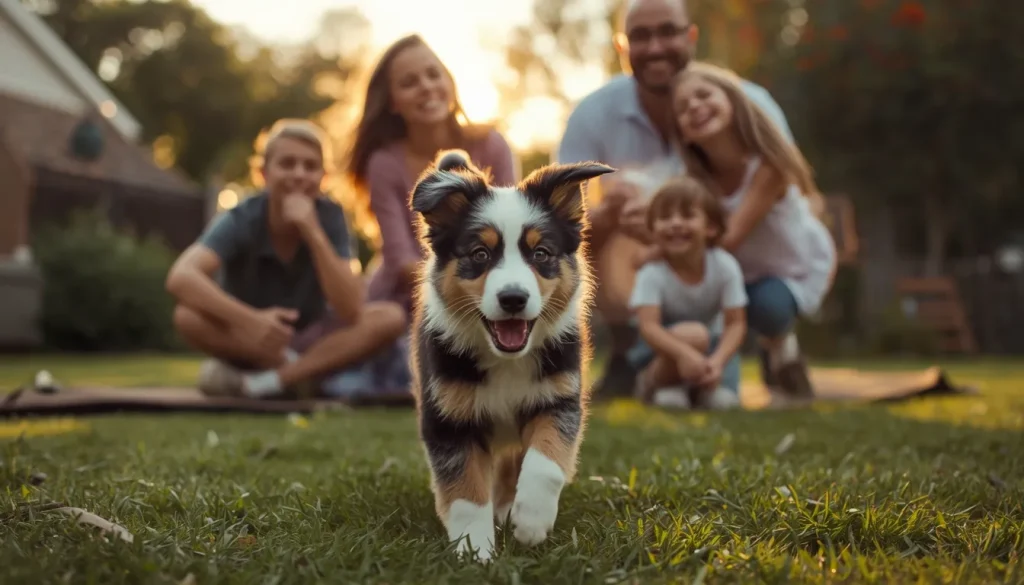
Living with an Aussie dog is like having a best friend who’s always game for an adventure.
From hiking trails to backyard fetch marathons, they’re happiest when they’re doing something with you.
Expect your Australian Shepherd Puppy to:
- Follow you from room to room
- React to every sound and movement
- Seek attention, often by nudging or pawing you
- Act as your shadow, supervisor, and emotional support animal
They crave companionship, so long hours alone can lead to stress or boredom-based behaviours. If you’re not home often, consider doggy daycare or a second pet.
Ideal Living Environment for an Aussie
While they can adapt to apartments with enough daily exercise, Australian Shepherds truly thrive in homes with:
- A fenced yard to run and play
- Space for training, playtime, and mental stimulation
- An active family that includes the dog in daily routines
They’re not couch potatoes—more like furry athletes with a brain!
Cost of Raising an Australian Shepherd Puppy
Upfront Costs
Bringing home an Australian Shepherd Puppy isn’t cheap, especially from a quality breeder. Expect:
- Puppy price: $800–$2,500 depending on lineage
- Initial supplies: $200–$500 (crate, bed, toys, bowls, leash, etc.)
- Vet visits/vaccinations: $100–$300
- Spay/neuter surgery: $200–$400
Ongoing Expenses
Monthly costs typically run between $100 and $200, including:
- Premium dog food
- Grooming supplies
- Toys and chews
- Flea/tick/heartworm prevention
- Occasional boarding or dog-walking services
Like any intelligent breed, Aussies also benefit from continued training or puzzle games—another cost to factor in.
Should You Adopt or Buy an Australian Shepherd Puppy?
Adopting an Aussie Dog
Rescue organizations and shelters often have Aussies (and Aussie mixes!) looking for homes.
Adoption costs are usually lower, between $150–$500, and dogs may already be vaccinated or neutered.
Adoption pros:
- Saving a life
- Supporting responsible rescue practices
- Often already house-trained
Buying from a Breeder
If you’re going the breeder route, make sure they’re reputable and health-test their breeding dogs. Ask about the puppy’s parents, vaccination records, socialization, and return policy.
Avoid:
- Craigslist or online “backyard breeders”
- Breeders with no contracts or questions for you
- Puppies under 8 weeks old are being sold
Whether adopting or buying, the key is choosing a puppy that matches your lifestyle—and committing to their long-term care.
Conclusion

Raising an Australian Shepherd Puppy is like signing up for a full-time role as an adventurer, teacher, and best friend—all at once. Australian Shepherd puppies exist beyond reach to most but serve as a special dog choice for suitable households.
Their intelligence will impress you.
Their energy will exhaust you.
Their love? It’s unconditional.
If you’re ready to commit time, energy, and affection, an Aussie dog will repay you with endless loyalty, laughs, and cuddles. So lace up your sneakers and hide your socks—life with an Australian Shepherd is anything but boring.
FAQs
Are Australian Shepherd puppies easy to train?
Yes, positive outcome can be achieved through consistent training methods that rely on positive reinforcement techniques. Canines will outsmart owners who present an inconsistent approach due to their exceptional understanding capabilities. The process of training should commence at an early phase while becoming an integral part of everyday habits.
How much exercise does an Aussie dog need per day?
Your dog needs at least 1-2 hours of guided activities which combine walks with mental stimulation games. If you withhold physical activity, they will make up their own entertaining activities by digging or chewing your home items.
Are Australian Shepherds good with kids?
Generally, yes! They’re affectionate, playful, and protective. You should be cautious about herding actions which include heel-nipping particularly when children are present.
Do Aussie dogs shed a lot?
Yes—they have a thick double coat that sheds year-round and blows out during seasonal changes. Regular brushing helps manage the mess.
Can I leave an Australian Shepherd puppy home alone?
Not for long. People-oriented Aussies develop serious anxiety whenever separated from their family. The long hours at work require you to find either a dog walker or a doggy daycare service.
Are Australian Shepherds good apartment dogs?
Exercising your Aussie Dog and stimulating its mind needs daily commitment before making this decision. An exhausted Australian Shepard demonstrates health because it prevents their tendency to become both hoy and vocal.